

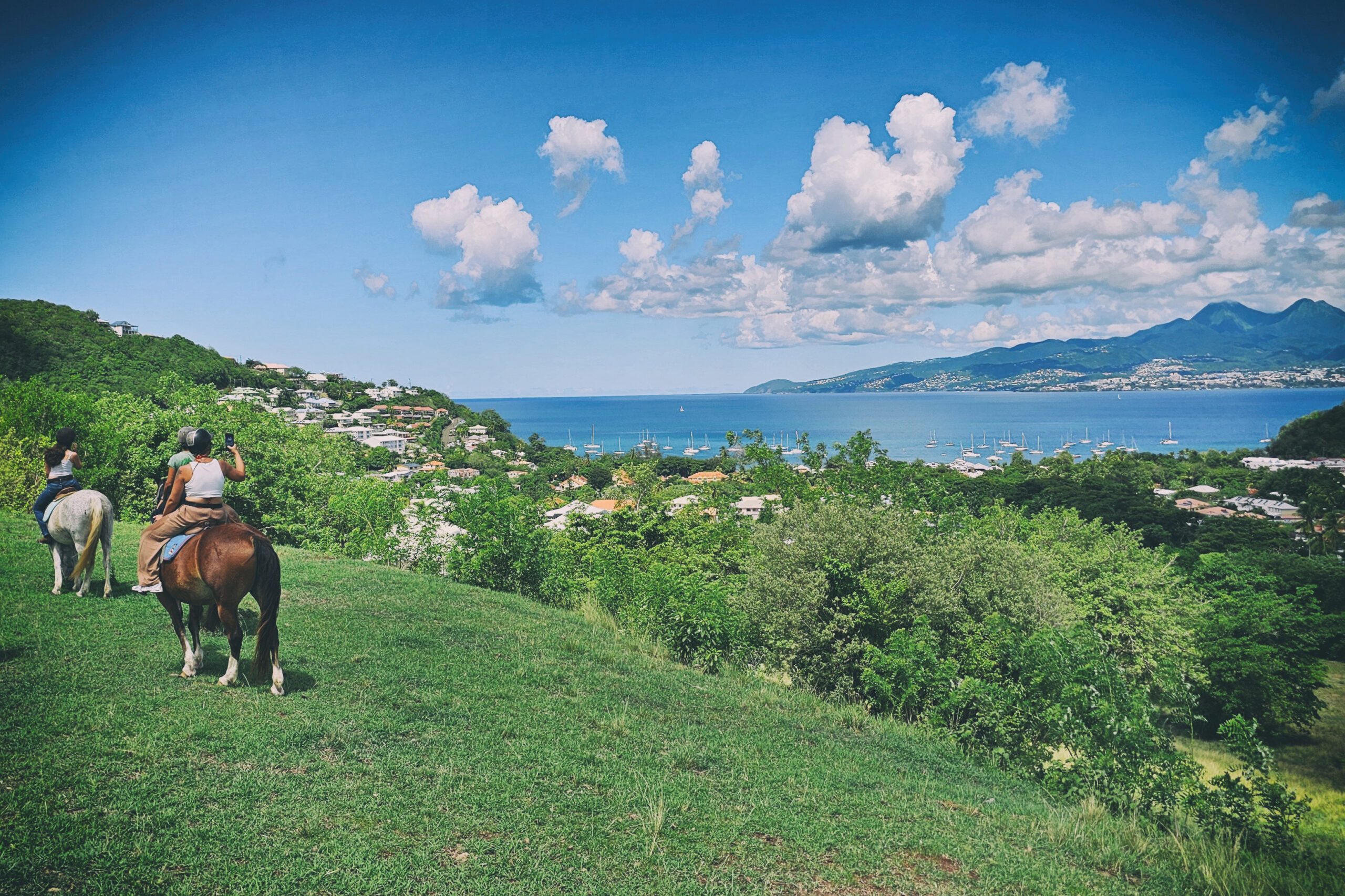
Fall is drawing to a close here in Quebec, and before the first Canadian snowfalls arrive, what better way to enjoy a little sunshine than with a getaway to the Caribbean? That’s how I had the pleasure of discovering Martinique on horseback, an experience that allowed me to take in some beautiful tropical scenery while also getting acquainted with a horse breed I knew very little about: the Martinican Creole horse.
It was a great opportunity to step outside my usual routine, give my Western saddles a little break, and enjoy a trail ride in some excellent company.
Table of Contents
A Trail Ride in the Heart of Martinique
With a good part of my extended family originally from the Caribbean, we took advantage of a family vacation to visit Martinique, less than a six-hour flight from Montreal. I’d visited this Caribbean island before, but this was the first time I’d taken the opportunity to really discover it from the saddle.
For this experience, I chose Ranch Jack, located in Les Trois-Îlets, in the southern part of the island. When I checked out their website, two things particularly caught my attention: the opportunity to go on proper horseback trail rides and, above all, the importance they place on the local Creole horse. It was the perfect opportunity to discover this breed in its natural environment.
The Martinican Creole Horse: A Small, Hardy, and Versatile Breed
Until then, the Creole horse was a breed I knew very little about. It shares some ancestry with the South American Criollo, with both breeds tracing part of their heritage back to Spanish horses. It’s a relatively small, hardy horse that has adapted particularly well to the climate and conditions of its tropical environment.
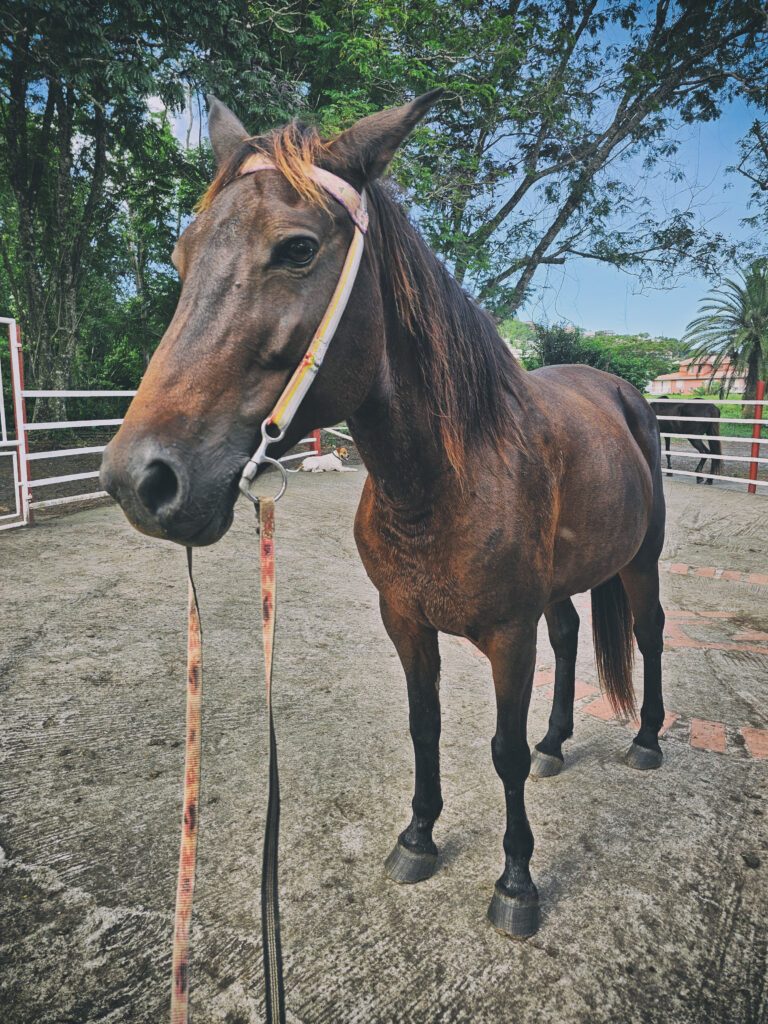
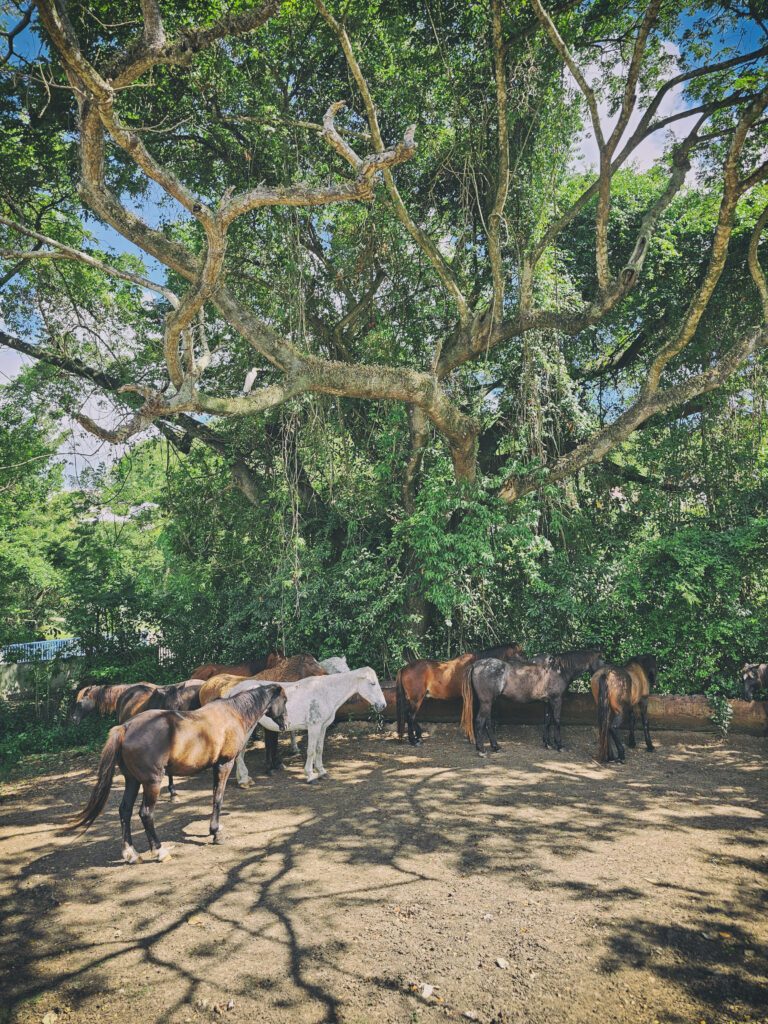
Like many breeds that developed under specific geographical and climatic conditions, the Creole horse has characteristics that allow it to thrive in its surroundings. Its hardiness and ability to work in sometimes demanding conditions make it an interesting partner for both ranch work and trail riding.
There’s always something rewarding about discovering horses from different equestrian traditions. Even though breeds have different origins and characteristics, you’ll find horses everywhere that have evolved alongside their environment and the needs of the people who bred them.
When a Western Rider Goes Back to English Riding!
It’s worth remembering that Martinique is part of France. So, for a change, I put my usual Western riding gear aside and went back to a more traditional English riding setup. That meant an English bridle, a French-style saddle, and, of course, a riding helmet!
When a Western Rider Goes Back to English Riding!
It’s worth remembering that Martinique is part of France. So, for a change, I put my usual Western riding gear aside and went back to a more traditional English riding setup.
That meant an English bridle, a French-style saddle, and, of course, a riding helmet! ;o) But, as the saying goes: when in Rome, do as the Romans do.
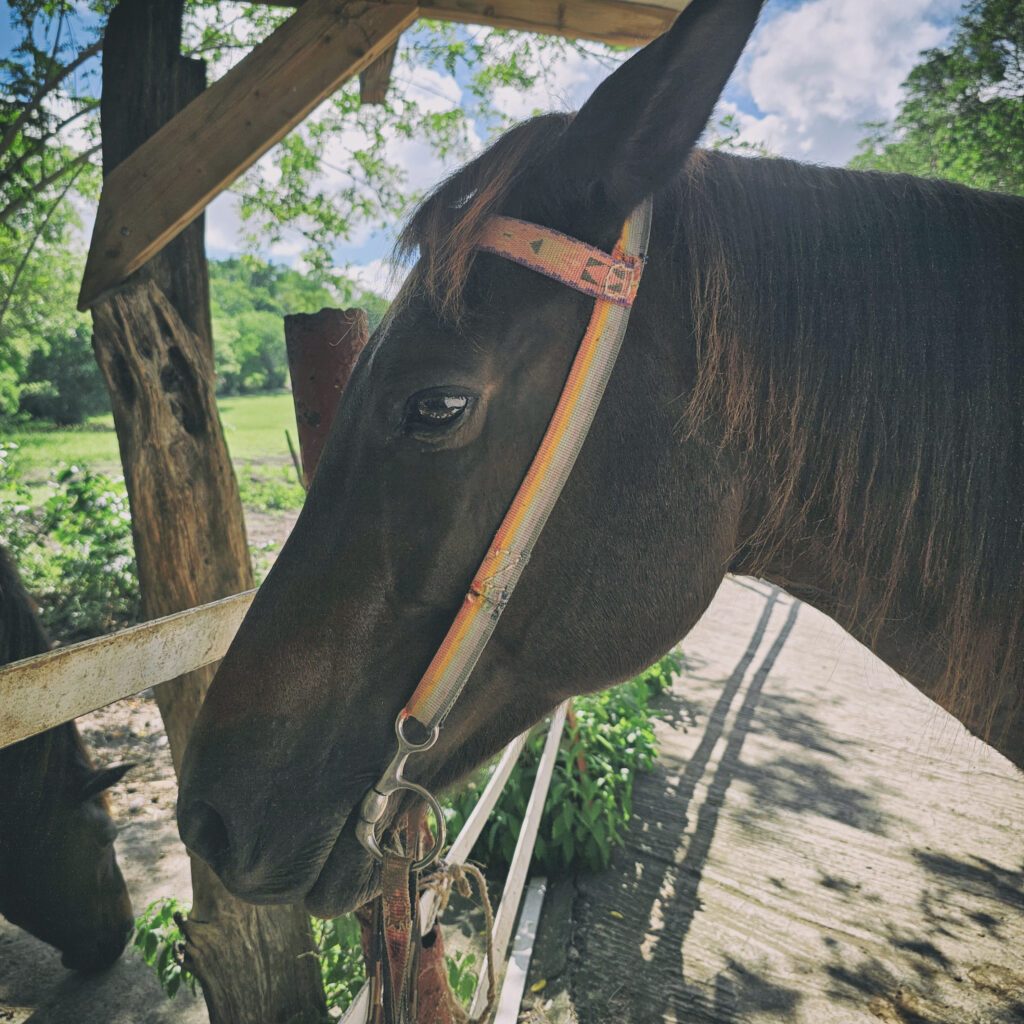
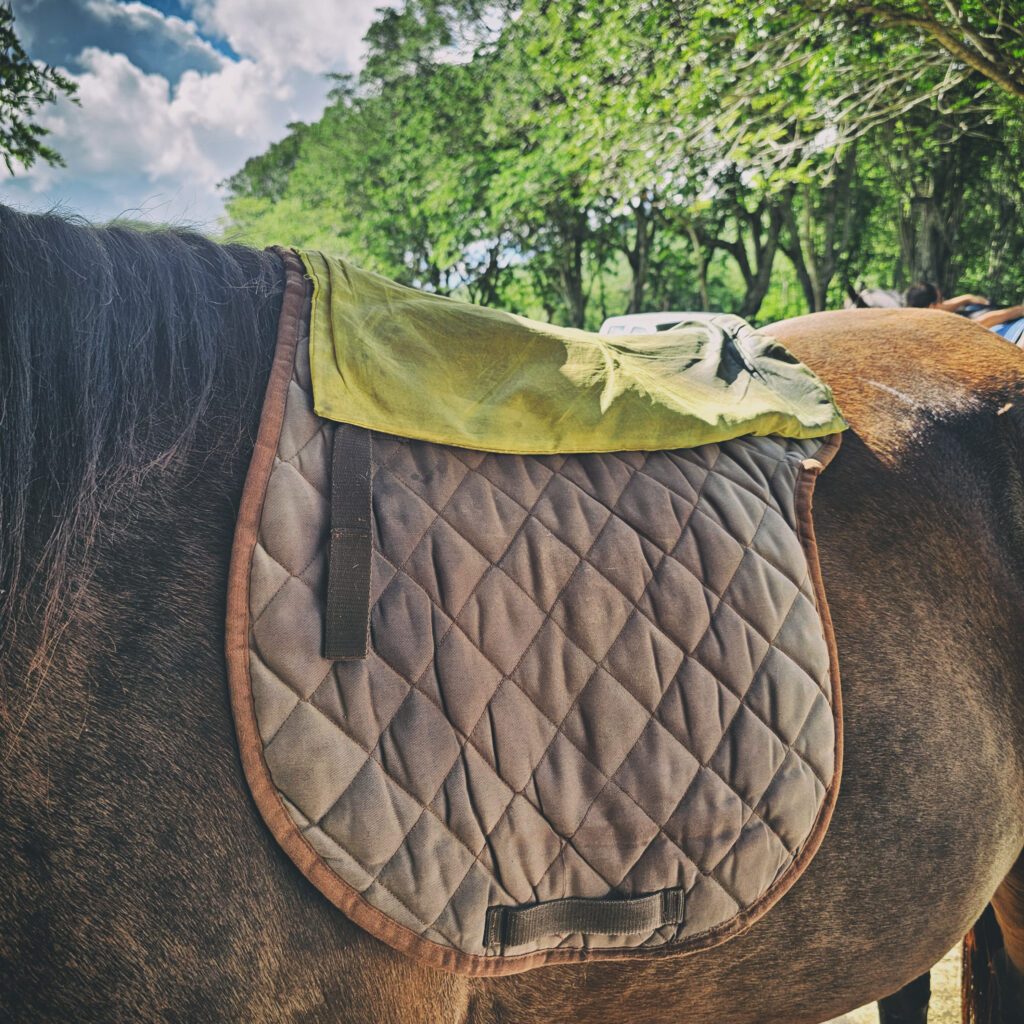
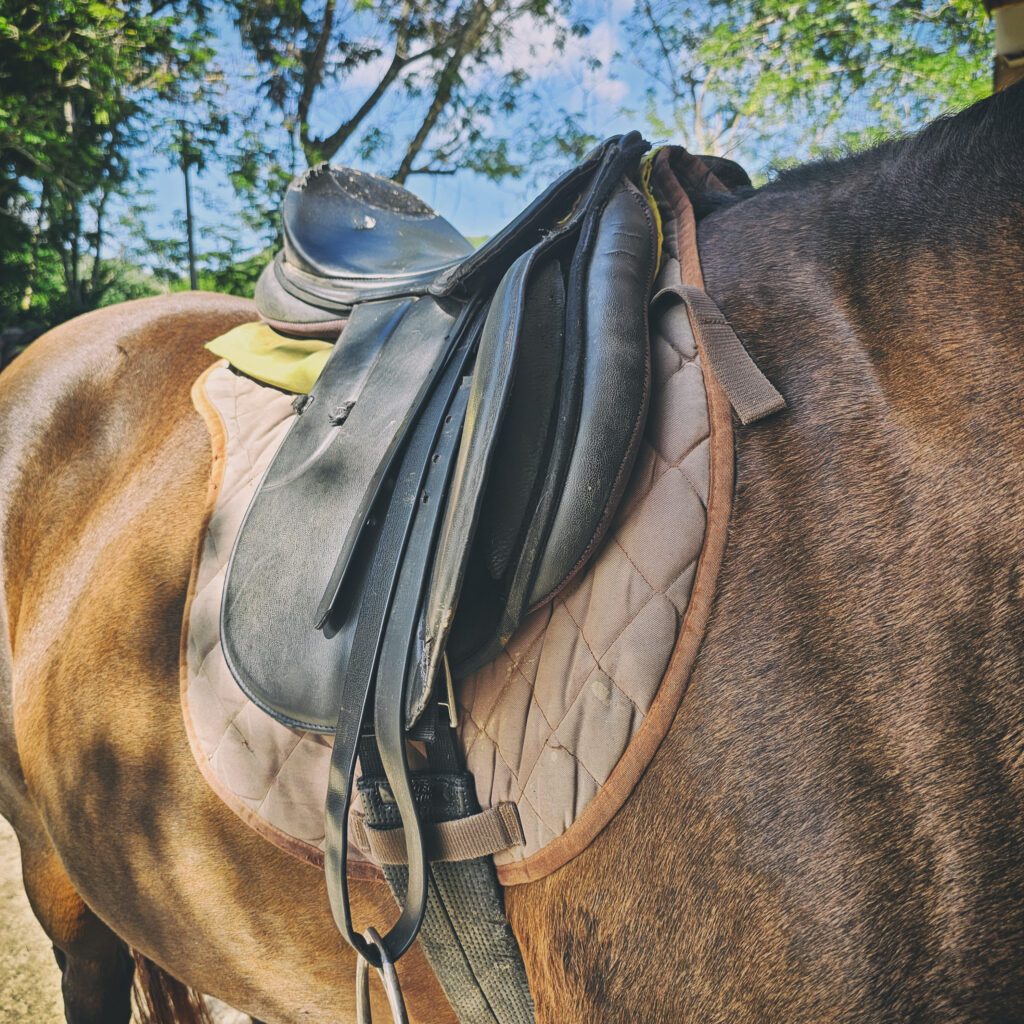
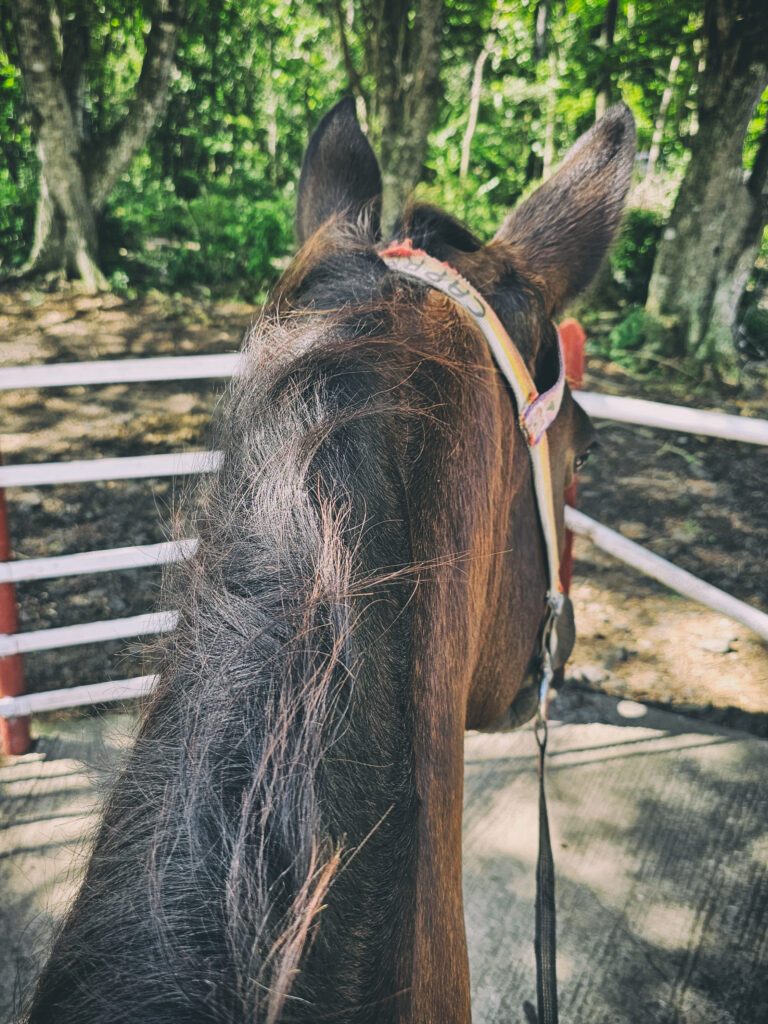
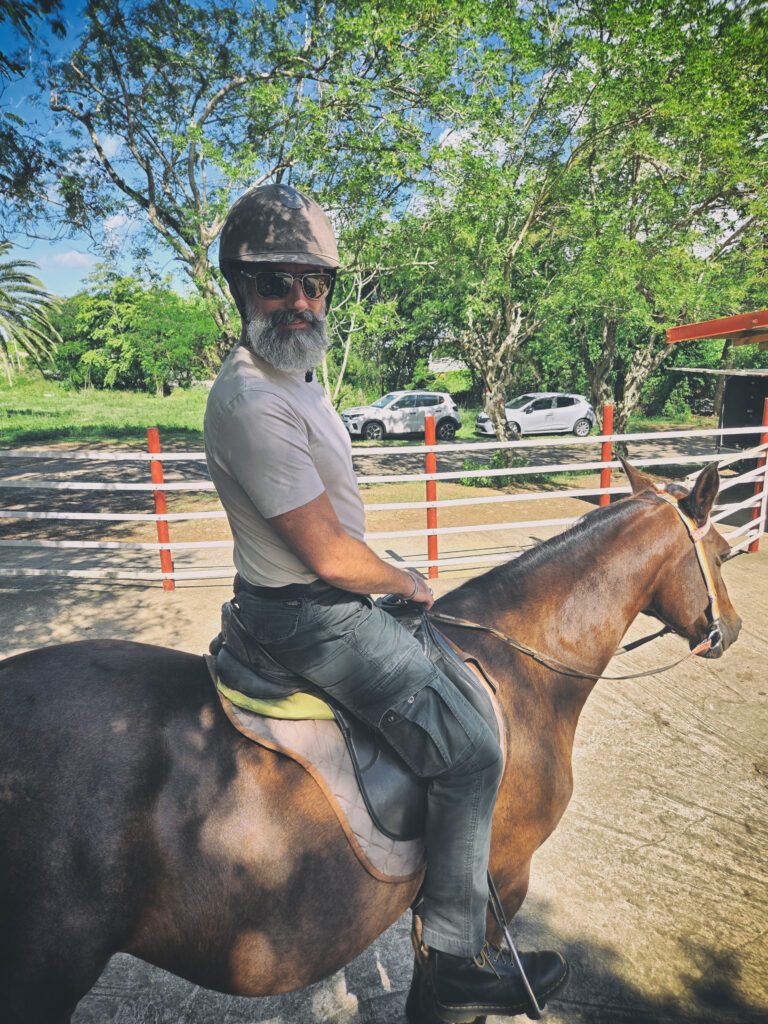
The important thing is to adapt to the circumstances and enjoy the experience. After all, horsemanship isn’t limited to one discipline or one type of saddle. There’s always value in stepping outside your comfort zone and discovering different ways of riding.
Matching the Right Horse to Each Rider
Before heading out, the Ranch Jack team took the time to match each rider with a suitable horse based on their height, weight, and riding experience. Once the horses had been watered, Laurence, our guide and riding instructor, put together a little assessment course for the group. There were two main goals: to give each rider a chance to get acquainted with their horse and to allow Laurence to assess everyone’s riding abilities before heading out on the trails.
This is particularly important when organizing a trail ride with a group of riders who have different levels of experience. Good horsemanship and proper group management start with choosing the right horse for each rider and taking the time to assess everyone’s abilities.
And once everyone was ready, it was finally time to hit the trails!
Well-Prepared Horses and Beautiful Scenery
The first thing that stood out to me during this ride was the quality of the horses’ preparation. They were exceptionally well desensitized, attentive, and pleasant to ride. These are essential qualities when you want riders of different experience levels to enjoy an outing on the trail.

Martinique also offers some incredible scenery. Between the tropical trails, lush vegetation, and beautiful views across the island, there’s plenty to take in along the way.
Laurence also did a great job of allowing everyone to ride at their own pace through several sections of the trail. It’s a thoughtful approach that gives more experienced riders the opportunity to enjoy a few livelier stretches while still respecting the abilities and comfort levels of the beginners. And Laurence wasn’t simply there to lead the ride. Throughout the outing, she shared plenty of interesting information and stories about Martinique’s history, wildlife, and plant life.
It’s a wonderful way to discover the island from a different perspective!
Tropical Heat: Keeping Both Horses and Riders Hydrated
In Martinique, temperatures can easily reach 86 to 104°F in the sunshine. Even though Creole horses are well adapted to their tropical environment, that doesn’t mean they don’t need special care and attention. The trail ride included several stops where the horses could drink and catch their breath.
Hydration is an important consideration whenever you’re working or riding horses in high temperatures. You need to adjust the workload, plan regular breaks, and keep an eye out for signs of fatigue or dehydration.
The riders also got a well-deserved break about two-thirds of the way through the ride. Water, cold drinks, and, of course, a little planter’s punch to enjoy the Caribbean atmosphere!
It was certainly a welcome break after spending several hours under the Caribbean sun.
Ranch Jack: From Martinique to the Jura Region of France
There’s another interesting detail worth mentioning: Ranch Jack actually has two locations!
In addition to the Martinique location run by Laurence, her sister operates another facility in the Jura region of mainland France, where she manages a string of nearly forty horses.
It’s a wonderful family story built around horses and trail riding, spanning the Atlantic and bringing together two very different environments.
If you’ve ever had the chance to visit the Ranch Jack location in the Jura, I’d be curious to hear about your experience!
A Great Discovery and One Last Gallop to Finish the Day
Once everyone had cooled down and rested, we got back in the saddle to finish our loop. I took the opportunity to enjoy one last gallop before calling it a day.
This ride at Ranch Jack turned out to be a wonderful experience. I really appreciated the quality of the horses, the professionalism of the staff, the beautiful scenery, and, most importantly, the opportunity to discover a horse breed that was previously unfamiliar to me. That’s one of the things I love about the horse world: there’s always something new to learn, a different approach to discover, or another equestrian tradition to explore.
Whether you ride Western, English, or practice any other discipline, the pleasure of spending time with horses remains the same.
A big thank you to Laurence for her warm welcome, excellent instruction, and for such a wonderful trail ride under the Martinican sunshine!